
Vehicle Wraps, Window Tint, PPF, and Paint Correction in Denver: A Complete Guide for Colorado Drivers
Vehicle Wraps, Window Tint, PPF, and Paint Correction in Denver: A Complete Guide for Colorado Drivers

Vehicle Wraps, Window Tint, PPF, and Paint Correction in Denver: A Complete Guide for Colorado Drivers
Colorado is one of the toughest places in the country to own a nice vehicle. Between high-altitude UV exposure, sudden hailstorms along the Front Range, gravel and sand on mountain roads, magnesium chloride on winter highways, and 300 days of sun a year, your paint, glass, and interior take a beating most cars never see. The good news is that the right combination of services can keep your vehicle looking new for years longer — and in many cases, actually increase its resale value.
This guide breaks down the five services that matter most for Denver-area drivers: vehicle wraps, window tint, paint protection film (PPF), professional detailing, and paint correction. Whether you're protecting a daily driver, dialing in a build, or branding a fleet, here's what you need to know before booking your appointment.
Vehicle Wraps: Color Changes, Branding, and Paint Protection in One
A vehicle wrap is a layer of high-performance vinyl applied directly over your factory paint. It's used for two main reasons: changing the look of your vehicle, and turning it into a rolling advertisement.
Color Change Wraps
If you've ever wanted a matte black truck, a satin charcoal SUV, a chrome supercar, or a color the manufacturer never offered, a wrap gets you there for a fraction of the cost of a full repaint. Quality wraps from brands like 3M, Avery Dennison, and KPMF typically last five to seven years when properly installed and cared for. Even better, when you're ready to change it or sell the vehicle, the wrap comes off cleanly and reveals the original factory paint underneath — fully preserved.
This is a big deal in Colorado, where harsh sun fades unprotected paint surprisingly fast. A wrap acts as a sacrificial layer, absorbing UV damage, light scratches, and minor abrasions instead of your paint.
Commercial and Fleet Wraps
For business owners, a vehicle wrap is one of the best advertising investments per dollar you can make. A single wrapped truck or van generates thousands of impressions per day driving around metro Denver, and unlike monthly ad spend, the cost is one-time. We help local businesses across Commerce City, Thornton, Aurora, Westminster, and the broader Front Range design and install branded wraps that turn their vehicles into mobile billboards.
What to Look For in a Wrap Shop
Wrap quality depends almost entirely on the installer. The vinyl is the same; the difference is in the prep, the seams, the edges, and how the panels are wrapped around complex curves. Ask to see recent work, look closely at door jambs and tight corners, and make sure the shop uses certified installers and premium vinyl.
Window Tint: Comfort, UV Protection, and Privacy
Window tint is one of the most cost-effective upgrades you can make to your vehicle, and in Colorado, the benefits go far beyond the look.
Why Tint Matters in Colorado
At Denver's elevation, UV exposure is roughly 25% stronger than at sea level. That same UV that fades your dashboard and cracks your leather is also what damages your skin during long drives. Quality window tint blocks up to 99% of UV rays and a significant percentage of infrared heat, which means a cooler cabin in summer, less load on your A/C, and dramatically less interior fading over time.
Types of Window Tint
Not all tint is the same, and the price difference reflects real performance differences:
Dyed film is the entry-level option. It looks good when new but fades and turns purple over time, and it doesn't reject much heat.
Carbon film is a step up. It holds its color, blocks more heat than dyed film, and offers better long-term performance.
Ceramic film is the premium choice. It uses non-metallic ceramic particles to block significantly more infrared heat without interfering with cell signals, GPS, or radio. The clarity is excellent, the color is stable for the life of the vehicle, and it carries a lifetime warranty from most reputable manufacturers.
For Colorado drivers, ceramic tint is almost always worth the upgrade. The heat rejection alone changes how the vehicle feels in summer.
Colorado Tint Laws
Tint laws vary by state, and Colorado regulates how dark the front side windows can be. Before you choose a shade, talk with your installer about what's legal for your front windows versus your rear windows, and what makes sense for your specific vehicle.
Paint Protection Film (PPF): The Best Defense Against Colorado Roads
If you've ever driven I-70 through the mountains in winter, taken a trip to Moab, or spent a day on a gravel forest road, you know what Colorado does to a front bumper. Rock chips, road rash, sand-blasted hoods, and chipped mirror caps are standard issue here.
Paint protection film, or PPF, is the most effective defense.
What PPF Actually Is
PPF is a clear, thick urethane film applied directly over your paint. The premium options are self-healing, meaning light scratches and swirl marks disappear with heat from the sun or warm water. The film is virtually invisible when properly installed and protects against rock chips, road debris, bug acid, mineral deposits, and minor scratches.
Coverage Options
Most customers choose one of three coverage levels:
Partial front typically covers the bumper, the leading portion of the hood and fenders, mirror caps, and sometimes headlights. It's the most popular package because it protects the areas that take 90% of the impact damage.
Full front extends coverage to the entire hood and fenders, eliminating the visible line that some people don't love on a partial wrap.
Full vehicle wraps the entire car. It's the ultimate level of protection and is common on exotics, new builds, and vehicles owners plan to keep long-term.
How Long PPF Lasts
Quality PPF from manufacturers like XPEL, SunTek, and STEK typically lasts seven to ten years and comes with a manufacturer warranty against yellowing, cracking, and delaminating. It's a meaningful investment, but for anyone who drives mountain roads, commutes on highways during construction season, or simply wants to preserve a new vehicle's resale value, it pays for itself.
PPF vs. Ceramic Coating
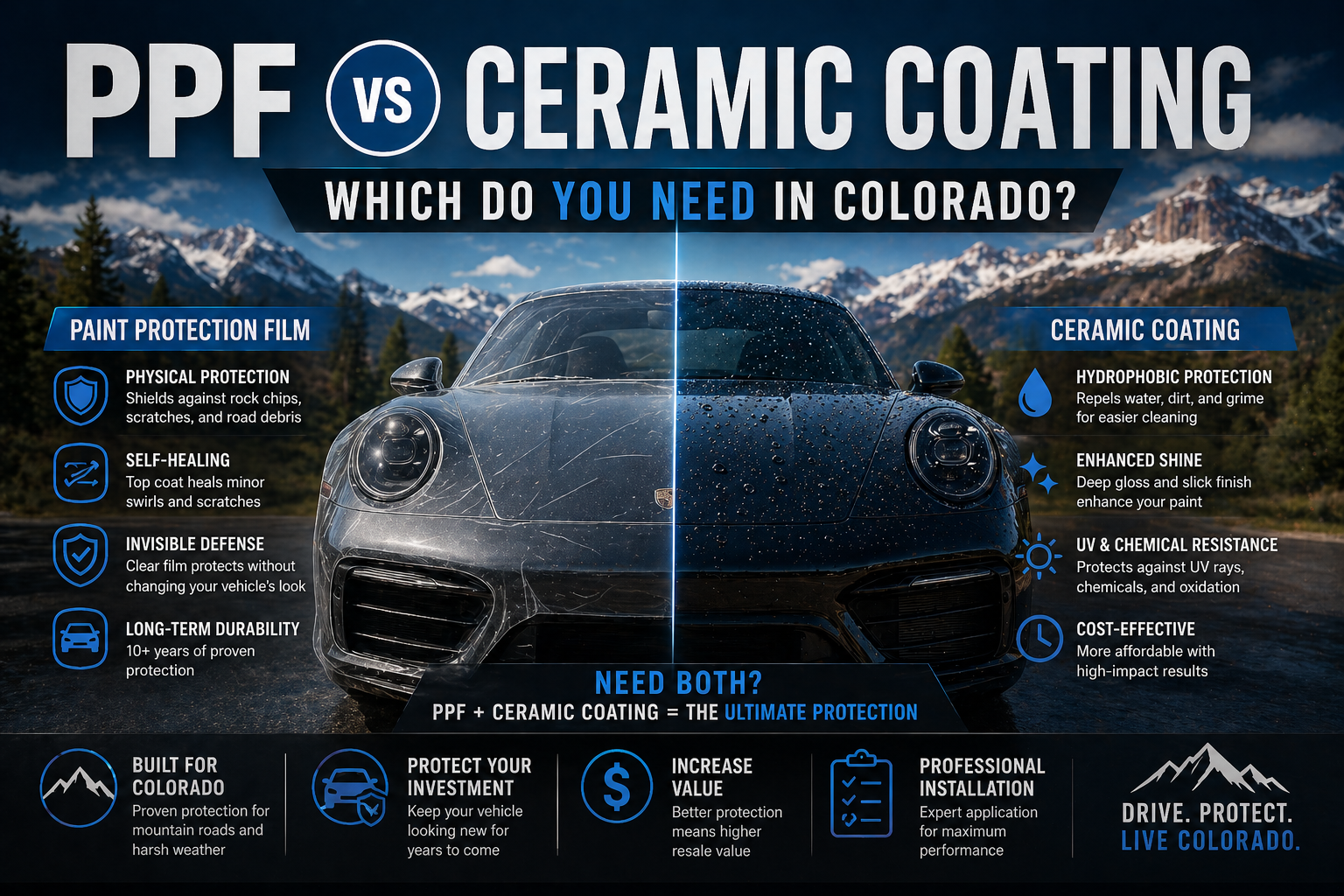
People often ask whether they need PPF if they have a ceramic coating, or vice versa. The answer is they do different jobs. Ceramic coatings make the surface easier to clean and add gloss and chemical resistance. They do not stop a rock from chipping your paint. PPF is the physical barrier; ceramic is the easy-care top layer. The best paint protection setups use both.
Professional Auto Detailing: The Foundation of Everything
Detailing is the foundation of every other service on this list. You can't apply tint to dirty windows, install PPF over contaminated paint, or do paint correction on a car that hasn't been properly washed and decontaminated. Even outside of those scenarios, a real detail does things a regular car wash cannot.
What's Actually Included
A full professional detail typically covers:
A thorough hand wash using the two-bucket method to avoid swirling the paint. A clay bar treatment that pulls embedded contaminants — overspray, industrial fallout, brake dust, and tree sap — out of the clear coat. Wheels and tires cleaned, dressed, and sealed. Door jambs, fuel doors, and trunk seals wiped down. A full interior vacuum, steam cleaning of carpets and upholstery if needed, conditioning of leather, and cleaning of every plastic and trim surface. Glass cleaning inside and out. Exterior trim restored, headlights polished if needed, and a paint sealant or wax applied to finish.
Maintenance Detailing vs. Restoration Detailing
Maintenance details are what you do every few months to keep a clean car clean. Restoration details are bigger projects — bringing a neglected vehicle back, prepping for sale, or getting a vehicle ready for paint correction or coating. The two have different scopes and different price points, and a good shop will tell you exactly what your vehicle needs.
Why It's Worth Paying for Real Detailing
Drive-through car washes use harsh chemicals and aggressive brushes that scratch your clear coat. Most "express details" are glorified washes. A real hand detail uses safe products, careful technique, and the time to actually clean the vehicle properly. The difference is immediately visible — and over years, it's the difference between a daily driver that still looks great at 100,000 miles and one that looks tired at 40,000.
Paint Correction: Restoring Depth, Clarity, and Gloss
If your paint is dull, swirled, holographic from a bad detail shop, scratched, oxidized, or just doesn't look like it used to, paint correction is what brings it back.
What Paint Correction Actually Does
Modern automotive paint has a clear coat layer on top of the colored base. Over time, that clear coat develops swirl marks from improper washing, scratches from car wash brushes, water spots, oxidation from UV, and general dullness. Paint correction uses a machine polisher and a series of compounds and pads to carefully remove a microscopic layer of clear coat, taking the imperfections with it and revealing the deep, glossy paint underneath.
Stages of Correction
You'll hear shops talk about one-step, two-step, and three-step corrections.
A one-step is a light enhancement that removes most light swirls and adds significant gloss. It's a great option for newer vehicles or daily drivers.
A two-step uses a more aggressive cutting compound followed by a finishing polish. This removes deeper scratches and produces a near-perfect finish.
A three-step or full multi-stage correction is for vehicles with significant defects or for show-quality results. It's labor-intensive — often 20 to 40+ hours of work — and the results are stunning.
Pair It With a Coating
Paint correction is the ideal time to apply a ceramic coating. Once the paint is corrected to the level you want, a professional ceramic coating locks in that finish, protects against UV and chemicals, and makes the vehicle dramatically easier to maintain. Skipping the coating after correction means you'll be back in the same condition within a year of regular washing. Doing them together is the right move.
How These Services Work Together
The smartest approach combines several of these services in the right order:
- Start with a thorough detail and decontamination to get the paint clean
- Perform paint correction to remove existing defects
- Apply PPF to high-impact areas like the front end
- Apply a ceramic coating over the rest of the paint and over the PPF itself
- Add window tint to protect the interior and improve comfort
- Schedule maintenance details every few months to keep everything looking new
This is how high-end builds and serious enthusiasts approach vehicle protection, and the same principles apply to a daily driver you want to keep nice for the long haul.
Why Local Matters
Choosing a Denver-area shop matters more than people realize. We deal with the specific challenges Colorado throws at vehicles every day — the altitude, the sun, the hail, the magnesium chloride, the gravel, the rapid temperature swings. A shop that's worked on hundreds of Front Range vehicles knows which products hold up, which installation techniques matter for our climate, and what to recommend for your specific use case.
We also know that not every customer needs the top-tier package. Sometimes the right answer is a partial PPF and ceramic tint. Sometimes it's a full correction and coating. Sometimes it's just a really good detail. A good shop will give you an honest assessment instead of upselling you on services you don't need.
Frequently Asked Questions
How long does a vehicle wrap last in Colorado? Quality vinyl wraps from premium manufacturers typically last five to seven years. Vehicles parked outside year-round in direct sun will see the lower end of that range; garaged vehicles often hit the longer end.
Can I put a wrap over damaged paint? A wrap can hide minor imperfections, but anything significant — rust, peeling clear coat, deep scratches — needs to be addressed first. Wraps adhere to the paint, so the paint needs to be sound.
Will window tint affect my visibility at night? Properly chosen and installed tint shouldn't significantly affect nighttime visibility. The key is choosing the right shade for your usage and not going too dark.
Does PPF turn yellow over time? Older PPF films had yellowing issues. Modern premium films are warrantied against yellowing for seven to ten years and typically perform well past that.
How often should I detail my vehicle? For most owners, a maintenance detail every three to four months keeps the vehicle in great shape. If you have a ceramic coating, you can stretch that interval.
Is paint correction safe for my paint? In skilled hands, yes. Paint correction removes a tiny fraction of clear coat thickness, well within safe limits. The risk comes from inexperienced operators using too much pressure or the wrong products. Always choose a shop that uses a paint thickness gauge and knows how to read it.
Ready to Protect Your Investment?
Whether you're looking for a color-change wrap, a ceramic tint package, full PPF protection, a deep detail, or a multi-stage paint correction, we're here to help. We've worked on everything from daily drivers and work trucks to track cars and exotics, and we treat every vehicle that comes through the shop the same way: like it's our own.
Reach out for a free quote, stop by the shop, or send us photos and a description of what you're looking for. We'll walk you through your options, give you straightforward pricing, and help you decide what makes sense for your vehicle and your budget.
Recent Posts