Why PPF pricing varies so much in Denver:
If you've started shopping around for paint protection film in the Denver metro, you've probably noticed quotes swing by thousands of dollars between shops — sometimes for what sounds like the same package. That's not a mistake. PPF pricing depends on a handful of real variables, and understanding them is the difference between getting a good deal and getting burned.
The four things that move the price most:
- How much of the vehicle is wrapped — a bumper-only install vs. a full body wrap is the biggest single factor.
- Vehicle size and complexity — a Civic takes less film and labor than a Bronco Raptor or a Rivian R1T.
- Film tier and brand — entry-level PPF, mid-tier self-healing film, and premium gloss-enhancing film all sit at different price points.
- Installer skill and warranty — certified shops with proper facilities, dust-controlled bays, and real warranties charge more, and they should.
Below is a realistic breakdown of what each common PPF package costs in the Denver area in 2026, what's included, and which one tends to make sense for which kind of driver.
Partial front PPF: $1,200 – $2,500
This is the entry-level package and the most common starting point for daily drivers in Colorado. A partial front typically covers:
- Front bumper
- Partial hood (usually 18–24 inches back)
- Partial fenders
- Side mirrors
- Headlights
It's the cheapest way to protect the panels that take the worst beating from I-25, I-70, and the gravel that ends up everywhere after Colorado snow seasons. The trade-off is the visible "edge line" partway up your hood and fenders — over a few years, the protected paint stays factory-fresh while the unprotected paint behind the line ages, and the line can become noticeable.
Best for: drivers under $40k vehicles who want core protection on a budget, leased vehicles, daily commuters.
Full front PPF: $2,500 – $4,500
This is the most popular package we install at Summit Customs, and for most Colorado drivers it's the sweet spot. A full front covers:
- Front bumper
- Full hood (no edge line)
- Full fenders
- Side mirrors
- Headlights
- Often includes A-pillars and the front portion of the roof
The "no edge line" point is huge. Because there's no transition halfway up the hood, the install is invisible and the protected panels age uniformly with the rest of the vehicle. Resale value stays intact and there's no awkward line to explain to the next owner.
Best for: new vehicles, vehicles you plan to keep 5+ years, anyone who drives I-70 to the mountains regularly.
Track package: $3,500 – $5,500
A track package extends a full front into the side panels that get hit most often by tire-thrown debris:
- Everything in the full front
- Rocker panels (the lower side panels below the doors)
- Door cup areas (where door handles are — protects against fingernail scratches)
- Sometimes lower quarter panels behind the rear wheels
The name comes from track-day cars, but in Colorado the package makes sense for any vehicle that sees regular highway driving — the rocker panels and door cups take a constant beating from tire spray, gravel kick-up, and grit during winter.
Best for: sports cars, high-end SUVs, trucks driven on dirt roads, anyone who drives 20k+ miles a year.
Full vehicle PPF: $5,500 – $9,000+
Full coverage means every painted panel on the vehicle is protected. This includes everything above plus:
- Full doors
- Roof
- Rear bumper
- Trunk/tailgate
- Quarter panels
For exotic or high-value vehicles, full PPF is essentially insurance against depreciation. For a $150k vehicle, an $8,000 full wrap that preserves resale value pays for itself. Some self-healing premium films also enhance gloss, giving a deeper, wetter look than factory paint.
Best for: exotic and high-end performance vehicles, rare colors, vehicles being kept long-term, lifted trucks that see real use.
What about the cheap quotes you've seen online?
If a shop is quoting full front PPF for $1,500, something's off. It usually means one of three things:
- Off-brand film with a short warranty (or none) that yellows or peels in 2–3 years
- Pre-cut kits installed sloppily with poor edge wrapping — film that lifts at the edges within a year
- No real facility — driveway or open garage installs that trap dust and contaminants under the film
Colorado's UV is brutal at altitude and our temperature swings are extreme. Cheap film fails fast here. The right question isn't "what's the cheapest quote I can get," it's "what does this cost over 5 years if it has to be redone."
What affects your specific quote
When you call for a quote, expect to be asked:
- Year, make, and model of your vehicle
- Whether the vehicle is new or has any existing chips, scratches, or paint correction needs
- Which package you're considering
- Color (white shows edges and contamination differently than dark colors)
- Any custom requests (smoked headlights, partial roof, etc.)
A good shop won't quote you a flat number sight-unseen on complex vehicles — Broncos, Rivians, and certain trucks have body panels that take significantly more film and time than a sedan.
Why Denver drivers need PPF more than most cities
Three things make Colorado uniquely rough on paint:
- Gravel and de-icing material — CDOT and local plows lay down gravel and magnesium chloride that ricochets off other cars constantly during winter months.
- High-altitude UV — Denver is a mile high. UV exposure is roughly 25% stronger than at sea level, which oxidizes paint faster.
- Hail — the Front Range is one of the worst hail corridors in the country. PPF won't stop major hail damage, but it does protect against the smaller hail and impact damage that happens year-round.
A vehicle that would stay clean in San Diego loses its factory finish in 2–3 Colorado winters. PPF is the single most effective way to prevent that.
Frequently asked questions
Is PPF worth it on an older vehicle? Generally only if the paint is in great condition. PPF locks in whatever's underneath it — including swirl marks and oxidation. A paint correction first, then PPF, makes sense on vehicles you're keeping long-term.
How long does PPF last in Colorado? Quality PPF properly installed lasts 7–10 years in Colorado conditions, with most premium films carrying a 10-year warranty against yellowing, cracking, and peeling.
Can PPF be removed without damaging paint? Yes — quality film installed correctly can be removed cleanly years later without affecting the paint underneath. This is one reason it's preferred over ceramic coating for resale-conscious owners.
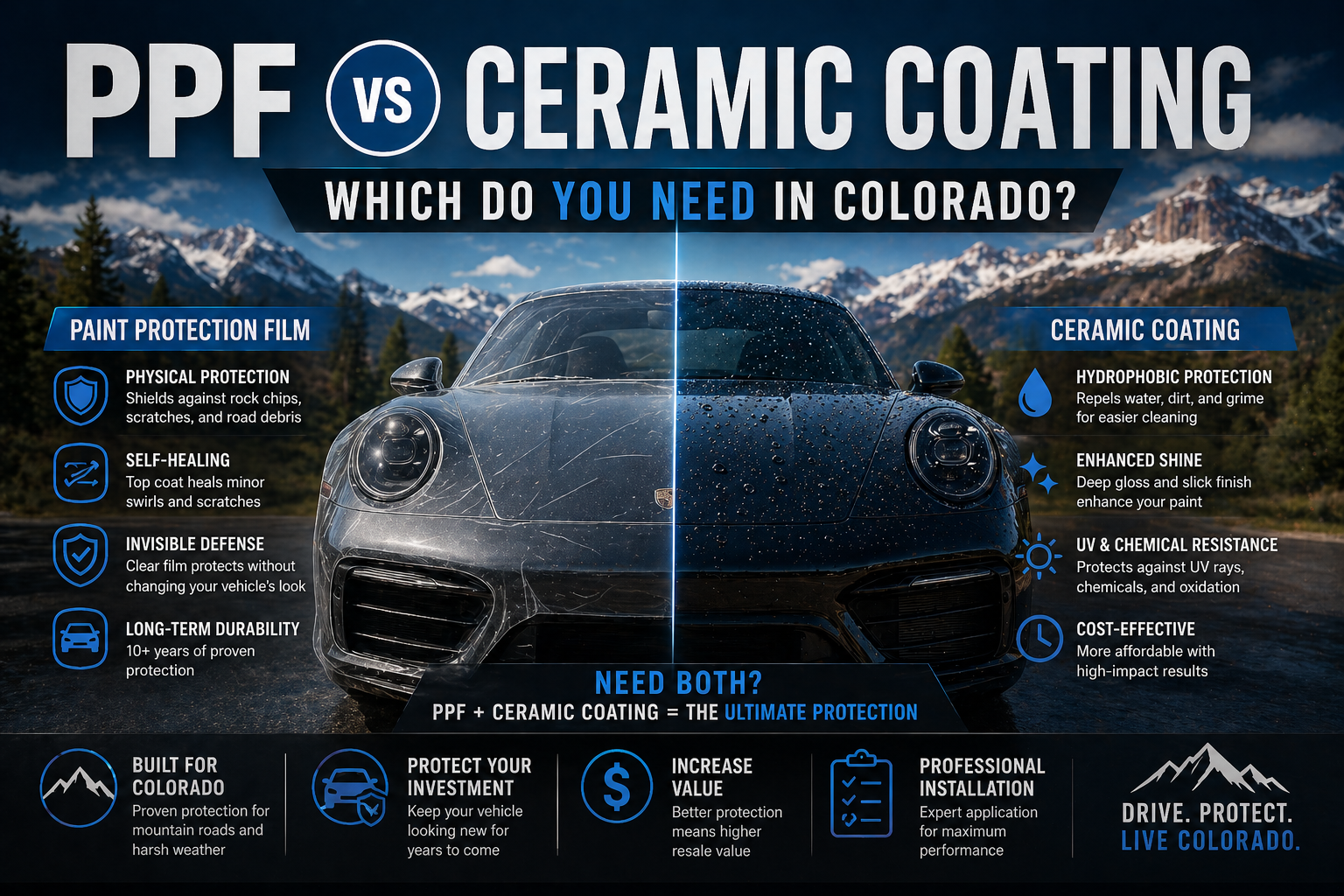
Do I need PPF if I have ceramic coating? They do different jobs. Ceramic coating is a chemical layer that resists water, dirt, and minor scratches. PPF is a physical barrier that absorbs rock and impact damage. Many drivers run both — PPF on impact zones, ceramic everywhere else.
How long does installation take? A partial front takes 1–2 days. Full front 2–3 days. Full vehicle 5–7 days. Quality installers don't rush — proper edge wrapping and curing time is what makes the install last.
Get a real quote for your vehicle
Pricing ranges are useful for planning, but the only number that matters is the one for your specific vehicle. We give free, no-pressure quotes at Summit Customs — bring the car by or send us photos and we'll walk you through your options.
Get a free PPF quote →
Or call us directly:
303-499-1164