
PPF vs Ceramic Coating: Which Do You Need in Colorado?
PPF vs Ceramic Coating: Which Do You Need in Colorado?
Quick answer
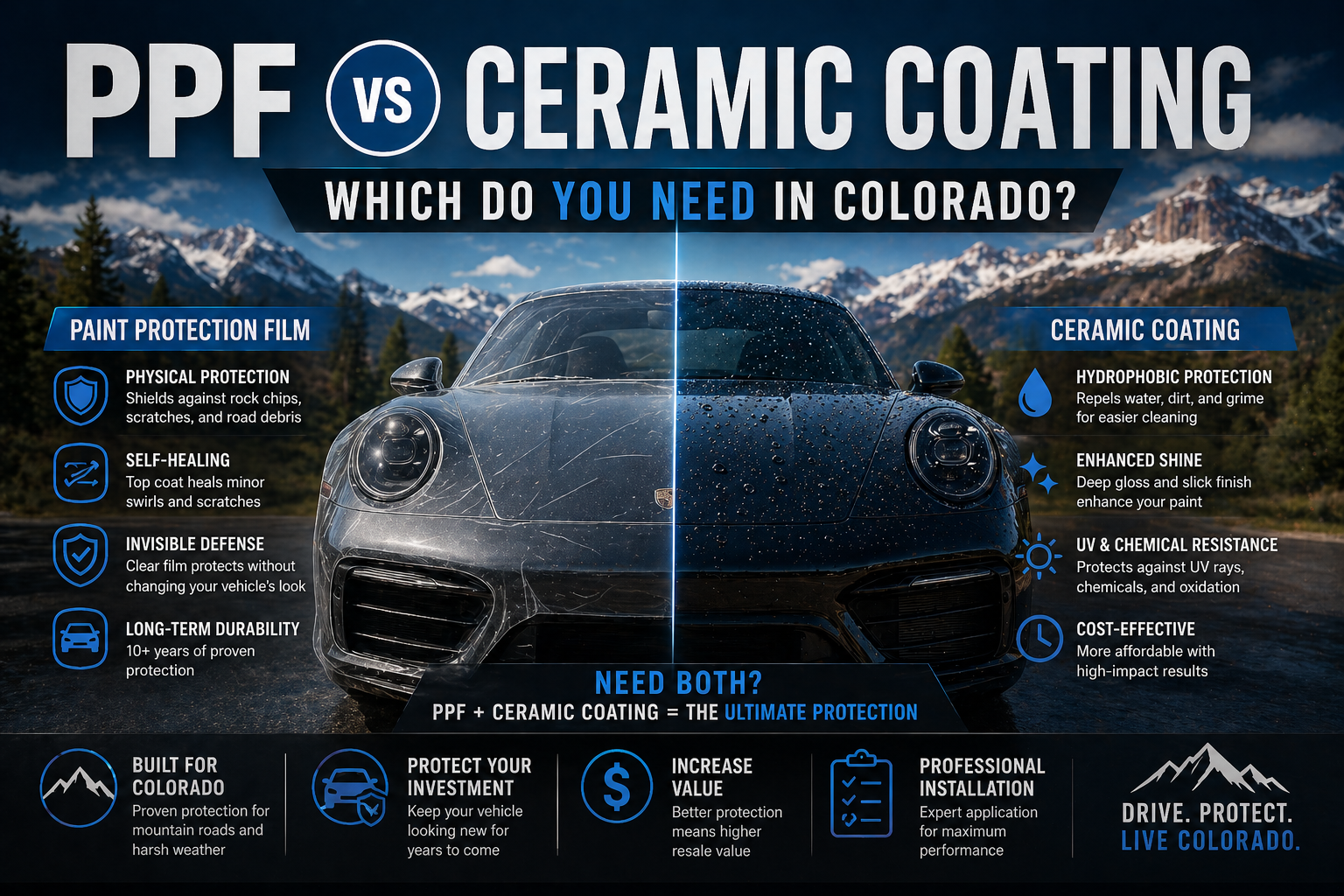
PPF and ceramic coating do completely different jobs — they're not really alternatives to each other. PPF is a physical film that protects against rock chips, scratches, and impact damage. Ceramic coating is a chemical layer that protects against UV, water spots, chemicals, and makes washing easier. PPF is the better single choice if your vehicle sees highway driving, mountain trips, or rough roads. Ceramic coating is the better single choice if your concern is appearance, contamination resistance, and ease of maintenance. For most Colorado drivers with budget for both, the ideal setup is PPF on impact zones (front end, rocker panels) plus ceramic coating across the entire vehicle.
PPF vs ceramic coating at a glance
FactorPaint Protection Film (PPF)Ceramic CoatingWhat it isPhysical urethane filmChemical glass-like coatingThickness6–10 mil (physical layer)1–3 microns (molecular bond)Impact protectionYes — absorbs rocks and debrisNoChemical protectionYesYesUV protectionYesYesHydrophobic (water beading)LimitedExcellentGloss enhancementSlightSignificantSelf-healingYes (premium PPF)NoLifespan7–10 years2–5 years (pro-grade)Typical cost$1,200–$9,000+$800–$2,500RemovableYes, cleanlyNo, must wear offBest forHigh-impact areas, full vehicle protectionWhole-vehicle appearance and maintenance
The fundamental difference
Paint Protection Film (PPF) is a physical barrier. It's a clear, urethane-based film roughly 6–10 mil thick — about 100x thicker than ceramic coating. PPF absorbs the energy from impacts: rock chips, road debris, light scratches, parking lot scrapes. Premium PPF is self-healing, meaning minor scratches disappear when exposed to heat (sun or warm water).
Ceramic coating is a chemical layer. It bonds to your clear coat at a molecular level, creating a hard, glass-like surface that's typically 1–3 microns thick. Ceramic coating doesn't stop a rock — but it does stop almost everything chemical (bird droppings, tree sap, mag chloride, bug acids, water spots) and makes the surface dramatically easier to wash.
This is the most important thing to understand before comparing them: they're not solving the same problem. Asking "should I get PPF or ceramic" is like asking "should I get insurance or a security system." The answer depends on what you're trying to prevent.
What each one actually protects against
PPF protects against:
- Rock chips and road debris
- Light scratches and scuffs
- Parking lot dings (minor)
- Bug acid etching (over short periods)
- Bird droppings and tree sap (if cleaned reasonably soon)
- UV fading of underlying paint
- Self-heals from minor scratches with heat exposure
Ceramic coating protects against:
- UV oxidation and paint fading
- Water spots (especially Colorado hard water)
- Mag chloride and de-icer chemistry
- Bird droppings, sap, and bug acids (longer protection window than PPF)
- Light contamination buildup
- Makes washing significantly easier (water sheets off)
- Adds depth and gloss to the paint finish
What ceramic coating does NOT do:
- Stop rock chips
- Prevent scratches from physical contact
- Add any meaningful impact protection
- Self-heal
This is the most common misconception customers bring in: "I have ceramic coating, so I don't need PPF." Ceramic coating is excellent at what it does, but it's roughly the thickness of a soap bubble — it can't physically stop debris.
Cost comparison
PPF pricing in Denver (we covered this in detail in our PPF cost guide):
- Partial front: $1,200–$2,500
- Full front: $2,500–$4,500
- Track package: $3,500–$5,500
- Full vehicle: $5,500–$9,000+
Ceramic coating pricing in Denver typically runs:
- Single-stage professional ceramic: $800–$1,200
- Multi-layer ceramic with paint correction: $1,500–$2,500
- Premium 9H multi-layer with extensive correction: $2,500–$3,500+
The price gap is real but doesn't tell the whole story. Ceramic coating typically lasts 2–5 years before needing reapplication. PPF lasts 7–10 years. Per year of protection:
- Full front PPF at $3,500 over 8 years = $437/year
- Multi-layer ceramic at $2,000 over 4 years = $500/year
They're closer than the sticker prices suggest, especially on a long enough timeline.
Durability and lifespan
PPF: 7–10 years of effective protection from quality manufacturers (XPEL, 3M, SunTek). Most premium PPF carries a 10-year warranty against yellowing, cracking, and peeling.
Ceramic coating: 2–5 years for professional-grade coatings, depending on:
- Coating tier (single-layer vs multi-layer)
- Quality of preparation (paint correction matters enormously)
- Maintenance frequency (regular pH-neutral washing extends life)
- Driving conditions (daily highway use shortens it)
Top-tier multi-layer professional coatings can hit 7–10 years in ideal conditions, but the realistic average for daily-driven Colorado vehicles is 3–4 years before performance noticeably degrades.
A note on "10-year ceramic" claims: any product promising 10+ years of ceramic protection should be approached carefully. Real-world performance rarely matches marketing duration claims — most professional installers will tell you 5 years is the practical ceiling for daily drivers in tough climates.
Look and aesthetics
PPF: modern self-healing PPF is nearly invisible when properly installed. You can typically only see the edges if you're looking for them. Some films enhance gloss slightly (3–5%); most are designed to be optically neutral so the paint underneath looks unchanged.
Ceramic coating: noticeably enhances gloss, adds depth, and makes the paint look "wetter." Cars look better with ceramic than without — this is one of the strongest aesthetic benefits.
If pure visual enhancement is a goal, ceramic wins. If invisibility is a goal (preserving the factory look while adding protection), PPF wins.
A combination of both gives you the deepest possible look: the protection of PPF plus the gloss enhancement of ceramic on top. Many high-end installs do exactly this.
Maintenance differences
PPF maintenance:
- Hand washing recommended; touchless washes acceptable
- Self-healing handles most minor scratches naturally
- Edges can attract dirt over time and benefit from periodic detailing
- No special chemicals required
Ceramic coating maintenance:
- Hand washing strongly preferred (automatic brush washes degrade the coating)
- pH-neutral soap required (alkaline soaps strip the coating)
- No waxing — adds nothing and can actually interfere with the coating
- Should be decontaminated and re-evaluated every 12–18 months
- Some coatings benefit from periodic ceramic spray "boosters"
Ceramic coating maintenance is more particular than PPF maintenance, but neither is difficult once you know the rules.
Reversibility
PPF: removable. Quality film installed by a professional and removed within its lifespan comes off cleanly without affecting the paint underneath. This is actually a common service when selling a vehicle — strip the PPF, sell with original paint pristine.
Ceramic coating: not removable in the traditional sense. It wears off naturally over years, or can be polished off with abrasive compounds during paint correction. You can't "uninstall" ceramic — it just degrades.
For drivers who want maximum future flexibility (selling, repainting, layering with wraps later), PPF preserves more options.
Which makes sense for which kind of driver
Choose PPF if:
- You drive I-70 to the mountains regularly
- You commute on highways with significant gravel/debris exposure
- You drive on dirt roads or gravel access regularly
- You have a vehicle worth $40,000+
- You want to preserve resale value through impact protection
- You're keeping the vehicle 5+ years
- You've already had paint chips and want to prevent more
Choose ceramic coating if:
- Your daily driving is mostly city/suburban with limited highway exposure
- Your primary concern is appearance and easier maintenance
- You want better gloss and a "wet look"
- You're tired of bird droppings, water spots, and bug acid etching paint
- Your vehicle is parked outdoors and exposed to UV all day
- You wash your car frequently and want it to be easier
- Budget is tighter ($800–$2,000 range)
Do both if:
- Your vehicle is high-value enough to justify it (~$50,000+)
- You want maximum protection from both physical and chemical threats
- You're keeping the vehicle long-term
- You drive in a mix of conditions (mountains, highways, daily commuting)
Why most premium customers do both
Here's something most blog posts won't tell you: the customers who genuinely care about protecting their vehicles long-term don't pick between PPF and ceramic — they layer them.
A common premium setup:
- PPF on the front end (full hood, full fenders, bumper, mirrors, headlights) — handles the rock chip and impact protection
- PPF on rocker panels and door cups for vehicles that see real highway use
- Ceramic coating across the entire vehicle, including over the PPF — handles UV, contamination, water spots, and gloss
Total investment for this setup typically runs $4,500–$8,000 depending on the vehicle. It's not cheap, but for owners of $60,000+ vehicles planning to keep them 5+ years, it's the most cost-effective long-term protection available.
The PPF stops the things that would have caused $1,000+ paint repairs. The ceramic stops the things that would have caused gradual paint degradation requiring $2,000–$5,000 in correction work down the line. Combined, they often save more than they cost over the ownership timeline.
Why Colorado affects the PPF vs ceramic decision
A few Colorado-specific factors shift the math toward more protection rather than less:
- Mountain travel. I-70, US-285, and the drives to Vail, Breckenridge, Estes Park, and Steamboat involve hours of high-speed driving on roads with significant gravel, salt residue, and debris. PPF earns its money fast on these routes.
- Mag chloride. CDOT's de-icer is harsh on paint and wheels. Ceramic coating provides meaningful chemical resistance that prolongs paint life dramatically through Colorado winters.
- High-altitude UV. At 5,280+ feet, UV intensity is roughly 25% stronger than at sea level. Both PPF and ceramic coating block UV, slowing oxidation. The combination provides the best UV protection available.
- Hail. Neither product offers significant hail protection against major storms. Both provide minor benefit against small hail. Hail protection is its own conversation (covered in dedicated parking, garage time, hail-resistant car covers).
- Outdoor lifestyle. Colorado vehicles see more outdoor parking, more trail use, more dirt road exposure, and more direct sun than vehicles in coastal cities. The protection investment makes more sense here than in milder climates.
Common myths about PPF and ceramic coating
"Ceramic coating is just expensive wax." False. Wax is a temporary topical layer that lasts weeks to months. Ceramic coating is a chemical bond at the molecular level that lasts years. Different category of product entirely.
"PPF turns yellow over time." True for cheap film. False for quality film from XPEL, 3M, SunTek, and other premium manufacturers, which are engineered to resist yellowing for the full warranty period (typically 10 years).
"Ceramic coating means I never have to wash my car." False. Ceramic coating makes washing dramatically easier and reduces contamination buildup, but vehicles still need regular washing to stay protected.
"PPF is only for exotic cars." False. PPF makes economic sense on any vehicle worth $25,000+ if you're keeping it 5+ years. Daily drivers benefit just as much as exotics — sometimes more, because daily drivers see more impact damage.
"You can't do PPF over ceramic coating." False — but ceramic must be properly removed or the area being PPF'd must be carefully decontaminated first. Most professional shops handle this seamlessly.
"Ceramic coating prevents scratches." False. Ceramic has minor scratch resistance against contamination removal but cannot stop physical scratches from rocks, keys, automatic car wash brushes, or impacts.
"DIY ceramic is just as good as professional." False. DIY products are typically 1–2 micron coatings with 6–18 month lifespans. Professional coatings are 2–3 micron multi-layer applications with 3–7+ year lifespans, applied to properly corrected paint. The performance gap is significant.
Frequently asked questions
Can I have both PPF and ceramic coating on the same vehicle? Yes — and this is the most premium setup. Ceramic coating goes over PPF on protected panels, and directly on paint everywhere else. The combination provides physical impact protection plus chemical and UV protection.
Do I need ceramic coating if I have PPF? You don't need it, but ceramic coating extends the life of the PPF itself by adding a chemical layer that's easier to wash and resists contamination. Many drivers do both for this reason.
How long does ceramic coating last in Colorado? Professional-grade coatings typically last 2–4 years on daily-driven vehicles in Colorado conditions, with premium multi-layer coatings reaching 5+ years. UV at altitude shortens lifespan slightly compared to milder climates.
How long does PPF last in Colorado? Quality PPF lasts 7–10 years even in Colorado conditions. Most premium PPF carries a 10-year manufacturer warranty.
Which is better for a brand-new vehicle? Both, ideally. New vehicles benefit most because the paint is in factory condition — no swirls, oxidation, or contamination to lock in. The earlier you protect, the longer the protection has paint to preserve.
Do I need paint correction before either one? For PPF: minor preparation only — the film hides light defects. For ceramic coating: paint correction is essentially required. Ceramic locks in whatever's underneath it, including swirls and oxidation. Skipping correction means making any defects permanent for years.
Can PPF be applied to a wrapped vehicle? Color change PPF can replace both products at once (it's PPF that comes pre-colored). Standard PPF applied over vinyl wrap is generally not recommended.
Which one provides better resale value? PPF tends to provide stronger resale benefit because it preserves the factory paint underneath physically. Ceramic coating helps but doesn't protect against the impact damage that hurts resale most.
Get expert guidance for your specific vehicle
The right answer for your vehicle depends on how you drive, how long you'll own it, your budget, and your specific concerns. We've worked with hundreds of Colorado drivers across both services and can walk you through what makes sense for yours. Free, no-pressure consultations at Summit Customs in Commerce City — bring it by or send photos with the year/make/model and how you use the vehicle.
Get a free protection consultation →
Or call us directly: 303-499-1164
Summit Customs is a 3M Pro Shop Dealer based in Commerce City, serving Denver, Aurora, Boulder, Highlands Ranch, Thornton, and the entire Front Range.
Recent Posts